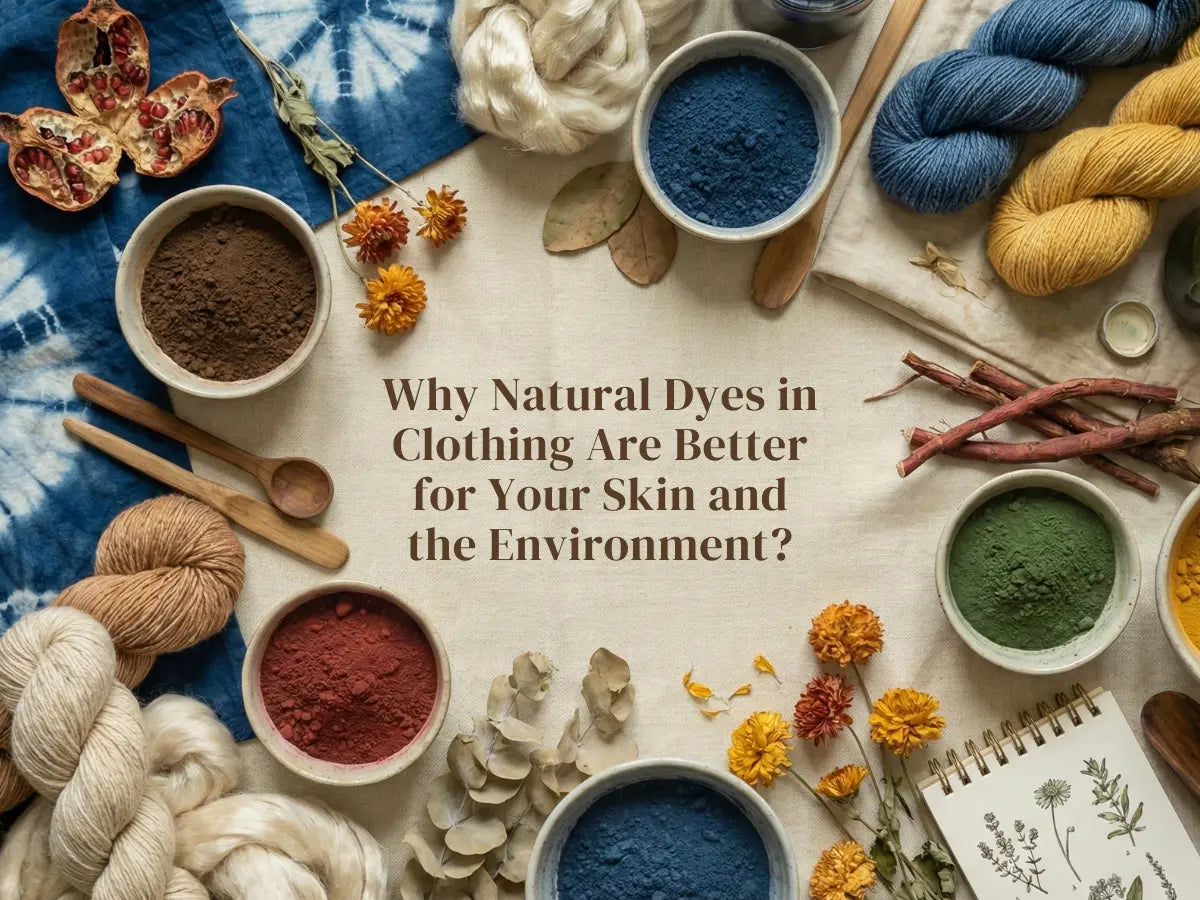
Why Natural Dyes in Clothing Are Better for Your Skin and the Environment?
The fashion industry's love affair with synthetic dyes has left a trail of consequences we're only now beginning to understand.
From polluted waterways to skin irritations, the chemicals in our clothing affect both our bodies and the planet. Natural dyes offer a different path, one that honours traditional methods while addressing modern concerns about health and sustainability.
What Your Clothes Are Really Coloured With
Synthetic dyes dominate fashion production. These petroleum-based chemicals create consistent, bold colours at low cost, which is why fast fashion brands rely on them. But this convenience comes with hidden costs.
The dyeing process for synthetic colours releases heavy metals, formaldehyde, and toxic compounds into water systems. A single textile mill can discharge thousands of litres of contaminated water daily. These chemicals persist in ecosystems for years, harming aquatic life and contaminating drinking water supplies.

Your skin absorbs what touches it. Synthetic dyes contain substances like azo compounds and heavy metals that can trigger allergic reactions, irritation, and sensitivity. For people with eczema or sensitive skin, these chemicals can worsen existing conditions.
Some brands now use low-impact or certified synthetic dyes, which represent an improvement over conventional option. These reduce water usage and eliminate certain toxic chemicals. However, they're still petroleum-derived and don't biodegrade naturally. Natural dyes go further by being completely renewable, biodegradable, and gentler on sensitive skin.
How Natural Dyes Work Differently
Natural dyes come from plants, minerals, and other organic sources. Indigo from plants, madder root for reds, turmeric for yellows. These materials have coloured textiles for thousands of years, long before laboratories existed.
The dyeing process uses minimal water and produces biodegradable waste. Plant-based dyes break down naturally, returning to the earth without leaving toxic residue. What enters waterways won't poison fish or contaminate soil.
The colours themselves tell a different story. Natural dyes create subtle, earthy tones that age beautifully. Rather than fading harshly like synthetic colours, naturally dyed fabrics develop character over time. The slight variations in shade from batch to batch prove authenticity, a mark of genuine craftsmanship rather than industrial uniformity.
Benefits for Your Skin
Your skin is your largest organ. What you wear matters. Natural dyes eliminate exposure to harsh chemicals, reducing the risk of irritation, rashes, and allergic reactions.
Clothing dyed with plant-based materials feels different. Many natural dyes have inherent properties beyond colour. Turmeric offers antimicrobial benefits. Indigo has been used traditionally for its cooling effect. While these aren't medical claims, they reflect centuries of practical knowledge about how materials interact with skin.
People with sensitive skin, children, and anyone prone to allergies particularly benefit from naturally dyed clothing. Without synthetic irritants, these garments work with your body rather than against it.
Environmental Impact That Matters
The fashion industry ranks among the world's worst polluters. Synthetic dye production and application contribute significantly to this problem. Choosing natural dyes addresses multiple issues simultaneously.
Water consumption drops dramatically. Traditional dyeing with plants requires less water than industrial synthetic processes. The water used can be safely returned to the environment or even used for irrigation.
Carbon emissions decrease. Natural dye sources are renewable. Plants regrow, absorbing carbon as they do. Synthetic dyes require petroleum extraction and energy-intensive manufacturing, contributing to climate change at every stage.
Biodiversity benefits too. Cultivating dye plants creates agricultural diversity, supporting ecosystems rather than depleting them. Some dye plants even improve soil quality for future crops.
Making the Choice
Natural dyes represent more than a trend. They're a return to methods that worked for millennia, updated for contemporary needs. When you choose naturally dyed clothing, you're choosing fabrics that respect your skin and reduce environmental harm.
How to Identify Naturally Dyed Clothing
Look for brands that explicitly state their use of natural or plant-based dyes. Genuine natural dyeing is a selling point, so brands doing it properly will mention it clearly in product descriptions.
Check for terms like "hand block printed," "botanical dyes," "plant-dyed," or specific dye sources (indigo, madder, turmeric). Be wary of vague terms like "eco-friendly colours" without specifics.
Colour is a clue. Natural dyes typically create earthy, muted tones: rust, ochre, deep blues, soft greens, warm browns. If the colour looks unnaturally bright or neon, it's likely synthetic.
Small-batch or hand-dyed pieces often indicate natural dyeing. Mass production rarely uses natural dyes due to the time and skill required. Look for slight colour variations between items, a hallmark of authentic natural dyeing that machines can't replicate.
Ask questions. Brands using natural dyes are usually proud to share their process. If a company can't or won't explain their dyeing methods, that tells you something too.
The colours may be softer, the production slower, but that's precisely the point. Real sustainability requires moving away from the fast, cheap, and chemically intensive. Your wardrobe doesn't need to harm you or the planet. Natural dyes prove there's a better way.