Simple Care Tips to Keep Your Handblocked Print Dresses Beautiful for Years
You've found a dress you love. The print is gorgeous, the fabric feels incredible, and you know someone's hands crafted every detail. Now comes the question: how do you keep it looking this good?
Handblocked prints aren't like high-street pieces you toss in the wash without thinking. They need a bit more attention, but nothing complicated. Think of it as caring for something that took time and skill to create. With the right approach, your dress will last for years and actually get better with age.
Washing: Gentle is Key
Always wash handblocked prints in cold water. Hot water can cause natural dyes to fade and cotton fibres to shrink. Cold water preserves both colour and shape while being kinder to the environment.

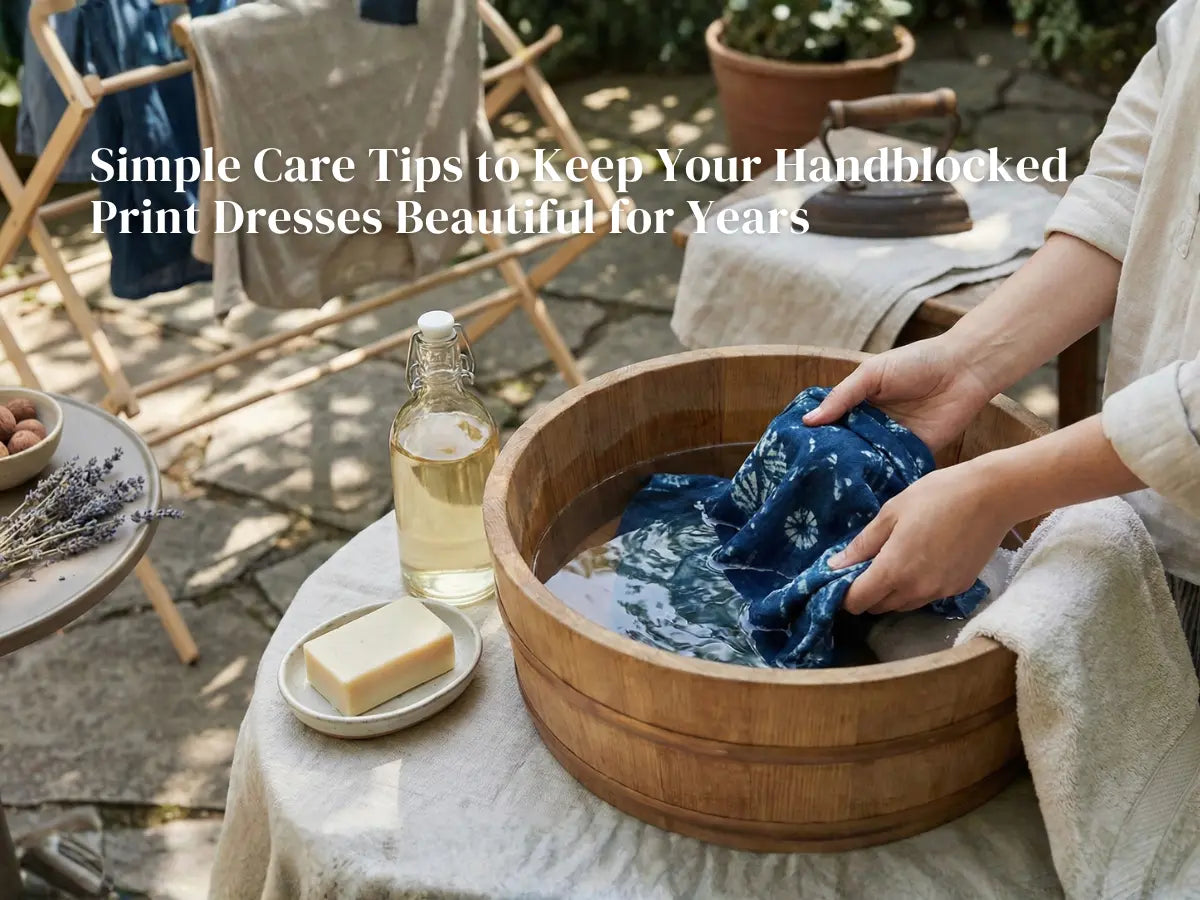
Hand washing is ideal, especially for the first few washes. Fill a basin with cold water, add a small amount of mild detergent, and gently agitate the fabric. Avoid harsh scrubbing or twisting, which can damage the print and fibres. Rinse thoroughly until the water runs clear.
If machine washing, use the delicate cycle and place your dress in a mesh laundry bag for protection. Wash similar colours together, particularly during the first few washes when natural dyes may release some colour. This is normal and doesn't mean the print is poorly made; it's simply how plant-based dyes behave.
Skip the harsh detergents. Choose mild, pH-neutral options without optical brighteners or bleach. These chemicals strip natural dyes and weaken cotton fibres. Many eco-friendly detergents work beautifully with naturally dyed fabrics.
Drying: Patience Pays Off
Never tumble dry handblocked prints. The heat damages natural dyes and causes shrinkage. Instead, gently squeeze out excess water (don't wring) and lay flat on a clean towel, reshaping the dress to its original form.
Line drying works well, but avoid direct sunlight. UV rays fade natural dyes faster than anything else. Dry your dress in shade or indoors where air circulates. Turn it inside out for extra protection.
The dress should dry naturally at its own pace. Rushing the process with heat will only compromise the fabric and colour.
Ironing: Low Heat, Maximum Care
Iron handblocked prints while slightly damp or use a steam setting. This makes removing wrinkles easier and prevents scorching.
Always iron on the reverse side to protect the print. Set your iron to a low or medium heat suitable for cotton. High heat can damage natural dyes and leave shiny marks on the fabric.
If you must iron the printed side, place a thin cotton cloth between the iron and the dress. This barrier prevents direct heat contact while still smoothing out creases.
Storage: Keep Them Happy
Store handblocked dresses in a cool, dry place away from direct sunlight. Sunlight fades natural dyes even when garments aren't being worn.
Use breathable garment bags or cotton covers rather than plastic. Natural fabrics need air circulation to prevent mustiness and mildew. Cedar blocks work better than mothballs for keeping pests away without chemical odours.
Fold heavier dresses to prevent stretching on hangers. Lighter pieces can hang, but ensure hangers are padded or wooden to maintain shoulder shape.
What About Colour Changes?
Natural dyes age differently than synthetic ones. Your dress may soften in colour over time, developing a vintage quality that many people find appealing. This isn't damage; it's the nature of plant-based dyes.
Some colours, particularly indigo and madder, may continue releasing small amounts of dye for several washes. This settles down as the excess dye washes out, leaving stable, beautiful colour behind.
The Reward of Good Care
Handblocked print dresses aren't meant to look brand new forever. They're designed to age gracefully, becoming softer and more comfortable with each wear. The slight fading, the developing texture, these are signs of a well-loved garment, not a failing one.
Treat your dress with respect, and it will serve you beautifully for years. That's the difference between fast fashion and pieces made to last.