Article: The Future of Traditional Block Printing in a Fast Fashion World
The Future of Traditional Block Printing in a Fast Fashion World
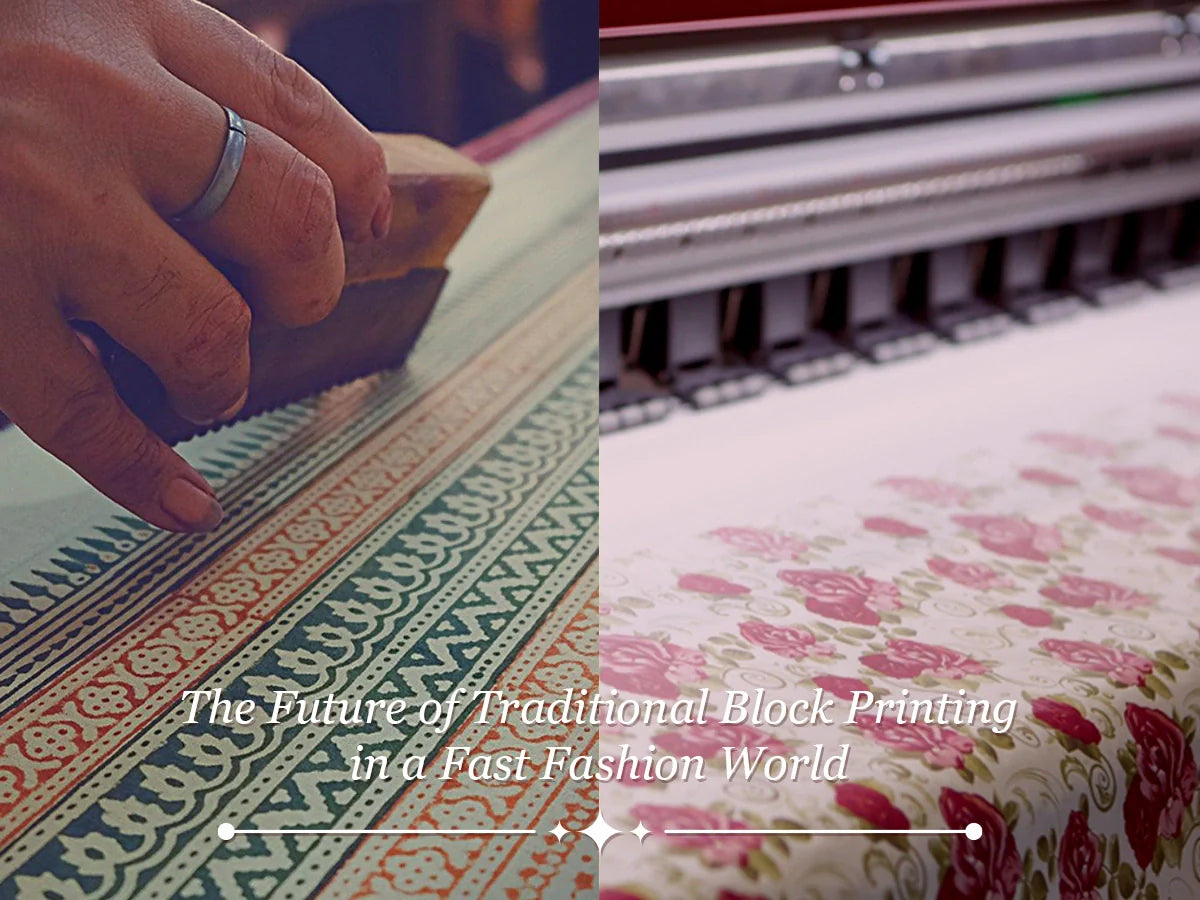
Block printing is one of the oldest textile traditions in the world. Originating centuries ago in South Asia, it involves hand-carved wooden blocks pressed onto fabric, one impression at a time. Each piece carries small, deliberate variations that no machine can replicate. In a world where fashion has never moved faster, this practice is finding sharper relevance than ever.
Fast Fashion vs Traditional Block Printing: What We've Lost
Fast fashion didn't just speed up production. It erased meaning. Over two decades of accelerating trend cycles, disposable garments, and race-to-the-bottom pricing, the industry trained consumers to buy more and care less. The result is a market flooded with clothes that fall apart, sit unworn, and end up in landfill within a year of purchase.

That model is under pressure. Women who once filled their wardrobes quickly are now asking different questions. Where was this made? By whom? Why does this feel cheap after three washes? The appetite for clothing with a clear origin and visible craft has grown from a niche interest into a genuine shift in how people want to shop.
"When everything is made quickly, nothing is valued."
Why Hand Block Printing Cannot Be Mass Produced
A single hand block-printed fabric can require 6 to 10 layers of printing, with each layer dried completely before the next begins. One metre of fabric may take an experienced artisan the better part of a day. The wooden blocks themselves, hand-carved with chisels and blades, can take weeks to create. There is no shortcut that preserves the result.
The process is exacting. Dye consistency, block alignment, fabric tension, ambient temperature — each variable affects the final print. A block pressed too hard bleeds. One pressed too lightly leaves a ghost impression. These are not problems you can solve with automation. They require judgement built through years of practice.
The Hands Behind the Print
In Bagru, a small town in Rajasthan known for its block printing heritage, artisans begin work before sunrise. The dye vats are prepared overnight. By morning, a craftsman like Ramesh, who learned the trade from his father and his father's father, is already aligning his first block of the day on a length of cotton laid across a padded table.
His hands are stained with indigo and madder red, colours that have seeped into his skin over thirty years of work. He presses the block down with steady, even force, lifts it cleanly, repositions, and repeats. When a slight misalignment occurs, he does not discard the fabric. That small shift becomes part of the pattern, a mark that tells you a human being made this.
"Block printing refuses to be rushed — and that is exactly why it matters."
Hand Block Printing Benefits for the Modern Wardrobe
Block-printed textiles translate well into contemporary fashion. The designs, rooted in geometric and floral motifs developed over centuries, sit confidently alongside modern cuts and minimal styling. More importantly, these garments are built to last. Well-printed fabric on natural fibre holds its colour and character over time. It wears in rather than wearing out.
For a woman building a considered wardrobe, that longevity matters. A block-printed kurta or dress is not a seasonal purchase. It is something you reach for repeatedly, something that looks better with age. That is a value proposition fast fashion structurally cannot offer.
Block Printing Is Not Surviving Despite Fast Fashion — It Is Becoming Valuable Because of It
As fast fashion has consumed more and more of the market, the things it cannot replicate have become rare. Craft, patience, provenance, and individuality are now scarce, and scarcity creates value. Block printing is not a relic that survived despite the industry's direction. It is precisely because of that direction that people are turning toward it.
At Golden Lotus Global, we work directly with artisan communities to bring hand block-printed textiles to women who want to wear something made with real intent. Not because it is a trend. Because it is worth it.