The Story of Jaipuri Block Printing and How It Became Modern Fashion
Block printed fabrics may feel timeless today, but their story began centuries ago in Jaipur, the Pink City of Rajasthan. What was once a craft reserved for royal courts has travelled across generations and continents to become part of modern wardrobes around the world.

This is the story of how Jaipuri block printing survived change, adapted to new ways of living, and found renewed meaning in contemporary fashion.
Origins in Royal Workshops
Block printing arrived in Jaipur over 400 years ago during the Mughal period, when skilled craftspeople were drawn to royal patronage. Under the protection of kings and noble families, the craft flourished. Artisans produced detailed textiles for palaces, celebrations, and ceremonial wear.
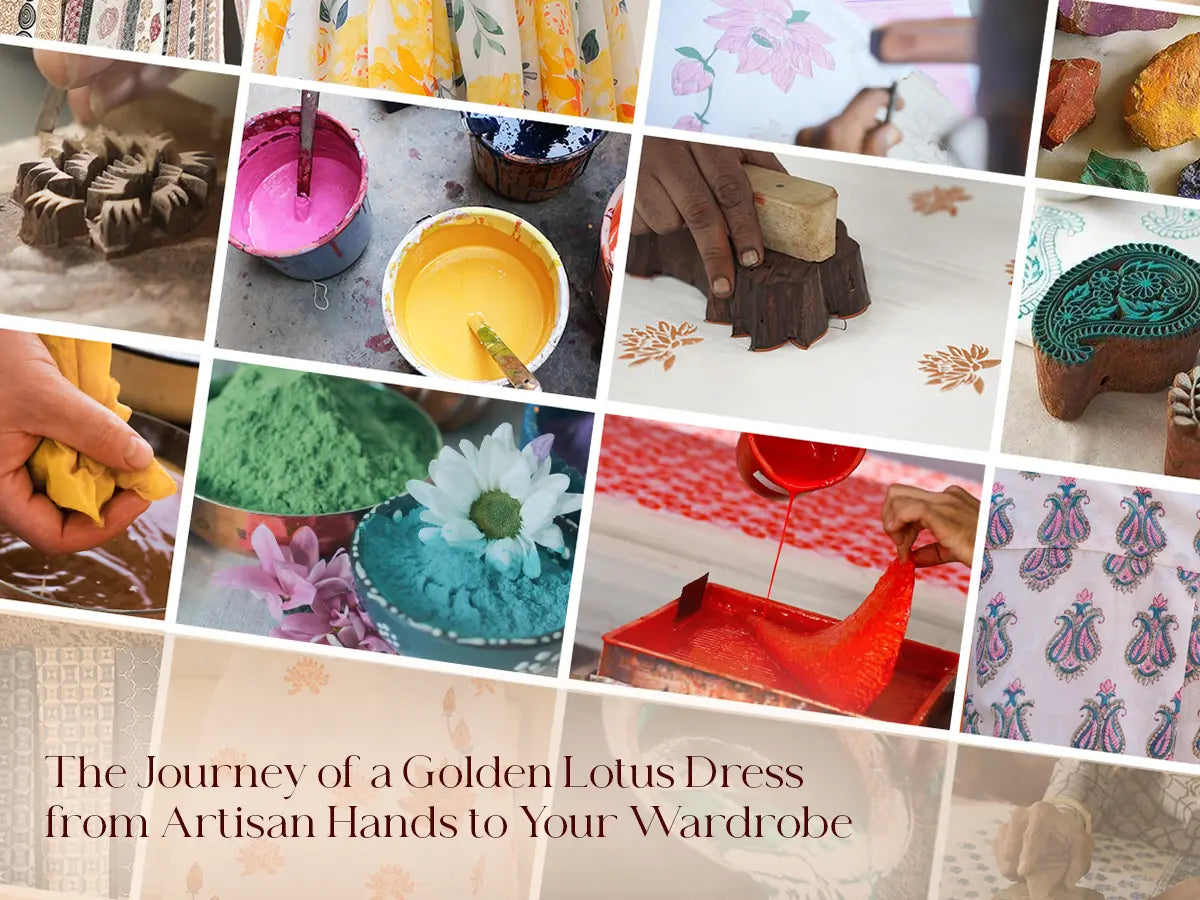
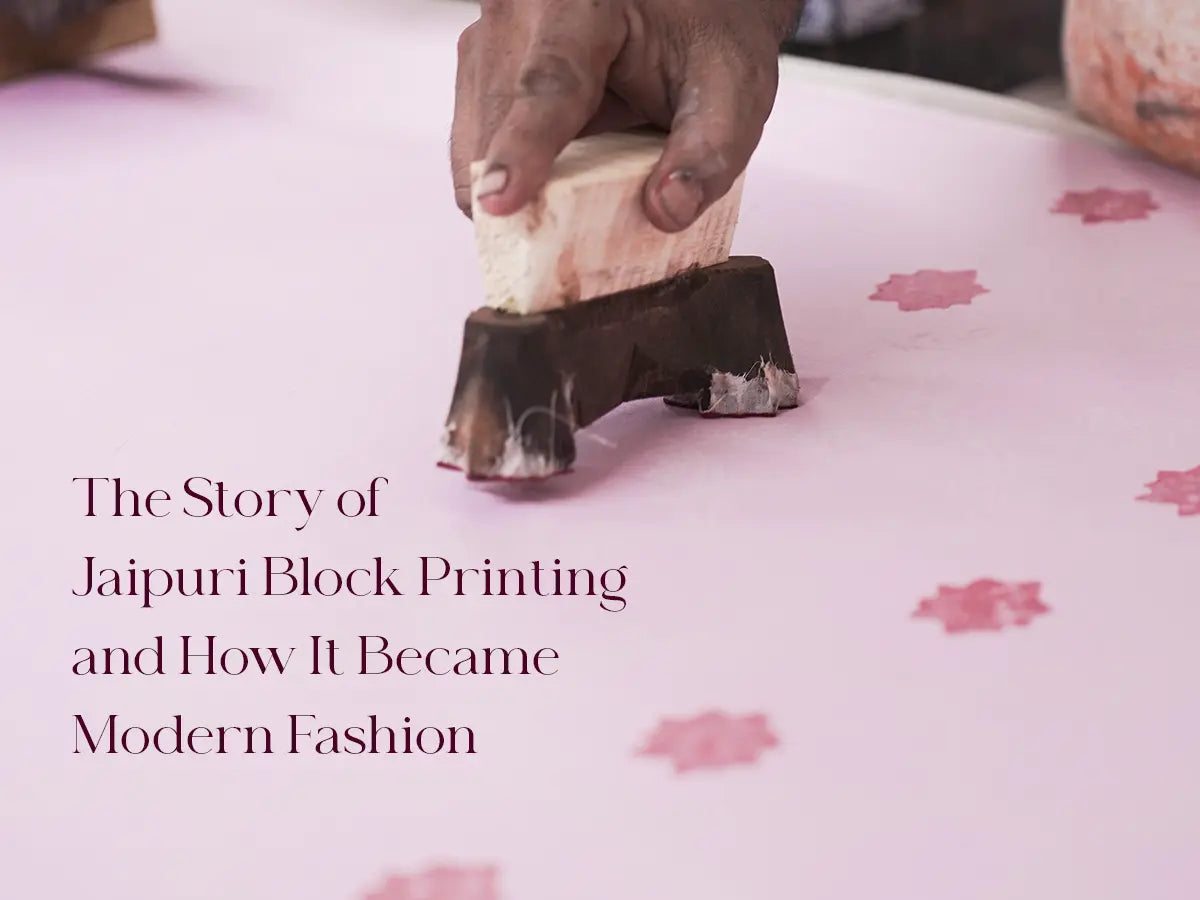
Floral motifs, geometric patterns, and designs inspired by nature became hallmarks of Jaipuri work. Each pattern was carved by hand into teak wood blocks. Natural dyes were prepared from plants, minerals, and roots. Printing required steady hands, sharp focus, and years of training.
These techniques were passed down through families, often from father to son. Knowledge was shared through practice rather than written instruction, with each generation refining skills while preserving tradition.
A Craft Under Threat
The 20th century brought major change. Industrialization introduced machine printing, which was faster, cheaper, and more consistent. Synthetic dyes offered brighter colors at lower costs. As demand shifted, many traditional workshops struggled to survive.
Artisan families were forced to make difficult choices. Some left the craft in search of stable income. Workshops that had operated for generations began to close. By the late 20th century, only a small number of families in and around Jaipur continued practicing traditional block printing.
Much of the work that remained was produced for export rather than local use. The craft survived, but only just.
The Revival Begins
In the late 1990s and early 2000s, interest in handcrafted textiles began to return. Growing awareness of fast fashion’s environmental and social impact led consumers to look for alternatives that felt more responsible and meaningful.
Block printed fabrics offered something different. Natural dyes, hand processes, and visible signs of human work stood in contrast to mass production. What had once been seen as old fashioned began to feel relevant again.
Indian designers started reintroducing block prints into modern clothing. The slight variations in print, once considered imperfections, became valued as proof of craftsmanship. Each piece felt personal rather than identical.
International brands also took notice. Collaborations with artisan workshops brought new opportunities, steady work, and renewed confidence to craftspeople who had kept the tradition alive.
Adapting Tradition for Modern Life
For Jaipuri block printing to survive, it had to evolve. Traditional patterns were reinterpreted to suit contemporary tastes. Bold geometric designs found a place in modern interiors. Softer florals worked well in relaxed clothing.
Colour palettes expanded too. Alongside traditional bright tones, muted shades and earthy neutrals became popular. Artisans continued to print by hand but explored new fabrics beyond cotton. Linen gained favour for its texture and breathability. Silk blends offered a more refined option.
Modern silhouettes helped bridge tradition and everyday wear.
Wrap dresses, maxi dresses, and co-ord sets allowed block printed fabrics to sit naturally in contemporary wardrobes while still honoring their roots.
Why It Matters Today
Jaipuri block printing matters today because it offers something mass production cannot. Each piece shows the marks of human effort. The process is slow, skilled, and thoughtful. In a world of identical clothing, this individuality has value.
For artisan families, the revival means stability and pride. Skills that were close to disappearing are now being passed on. Workshops are active again. The craft has a future.
For those who wear block printed clothing, the connection runs deeper than style. These garments carry history, care, and intention. They soften with wear, age gracefully, and tell a story over time rather than wearing out quickly.
From Jaipur to Your Wardrobe
When you choose a block printed garment, you become part of this journey. A craft shaped in royal workshops now lives in modern life. Traditional techniques meet contemporary design. History becomes something you can wear.
Jaipuri block printing did more than survive change. It adapted with care and purpose. And in doing so, it reminds us that some things still matter. Skilled hands. Natural materials. Time taken to do things well.
These values continue to find their place in the clothes we choose today.